

January in a Southern Garden
Happy New Year, friends! One of my big goals for the year ahead is to reactivate this blog and share monthly gardening tips to help you make the most of every season here in the southeast US, growing zones 7-9. I hope my practical, science-based advice for gardeners of all levels will be helpful for all of you!
Each month I’ll highlight what’s happening in my own landscape, what you can be doing in yours, and the small seasonal tasks that make a big difference. From cool season sowing and winter blooms to spring planting, summer management, and fall abundance, I’m excited to reconnect and grow alongside you.
Thanks for being here, and cheers to cultivating something wonderful together in the year ahead.
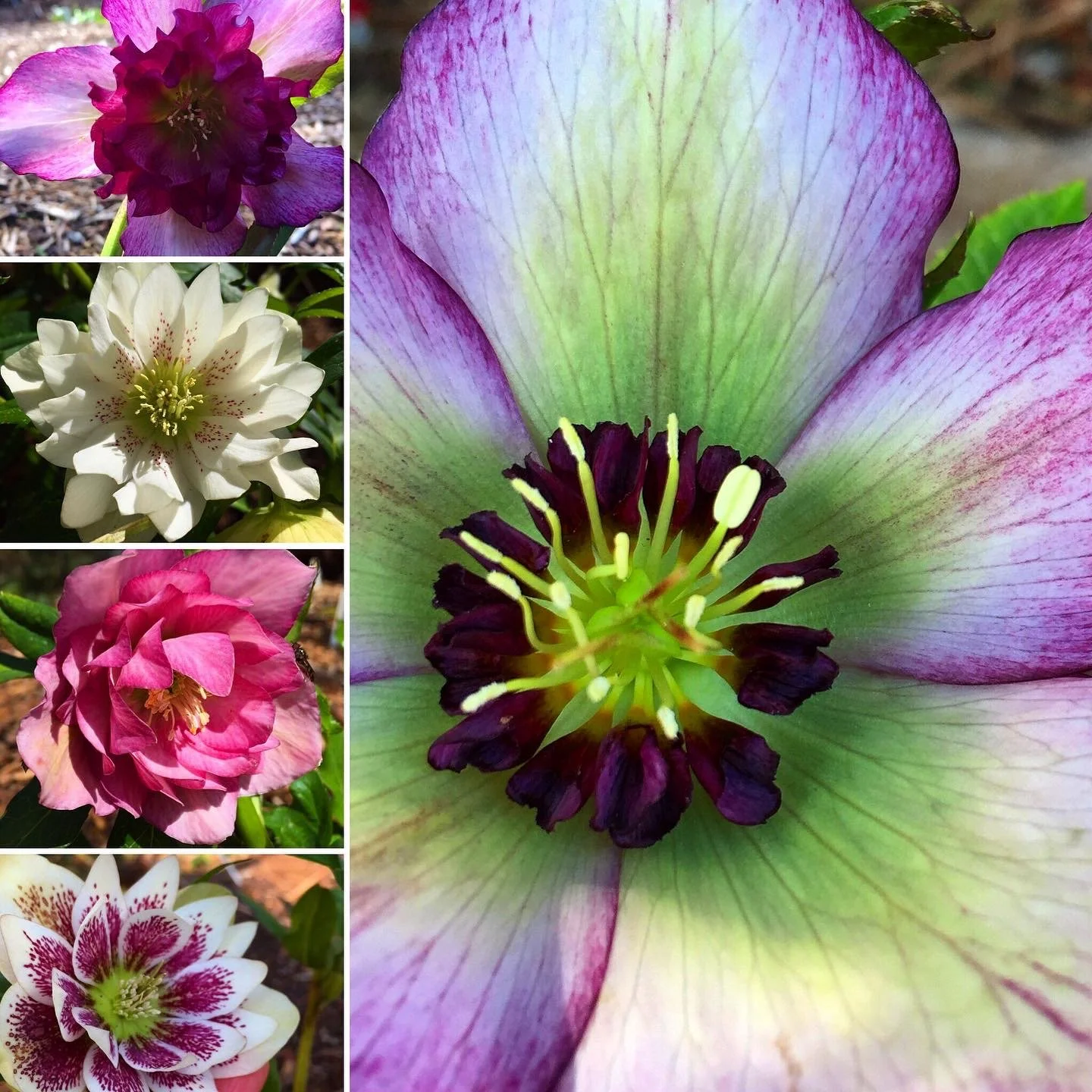
1. Celebrate the early bloomers
Even in the cold, NC gardens stay surprisingly lively. Look for winter flowers like Camellia japonica, hellebores, witch hazel, paperbush, and wintersweet. These shrubs rely on stored carbohydrates and hardy flower buds that tolerate freezing nights, making them reliable stars of the season.
Not only are the gorgeous in the garden, but many are ideal for floating flower arrangements which you can do outside, for long lasting beauty, or bring inside to enjoy their fragrance for a few days- they decompose faster with room temperature conditions.

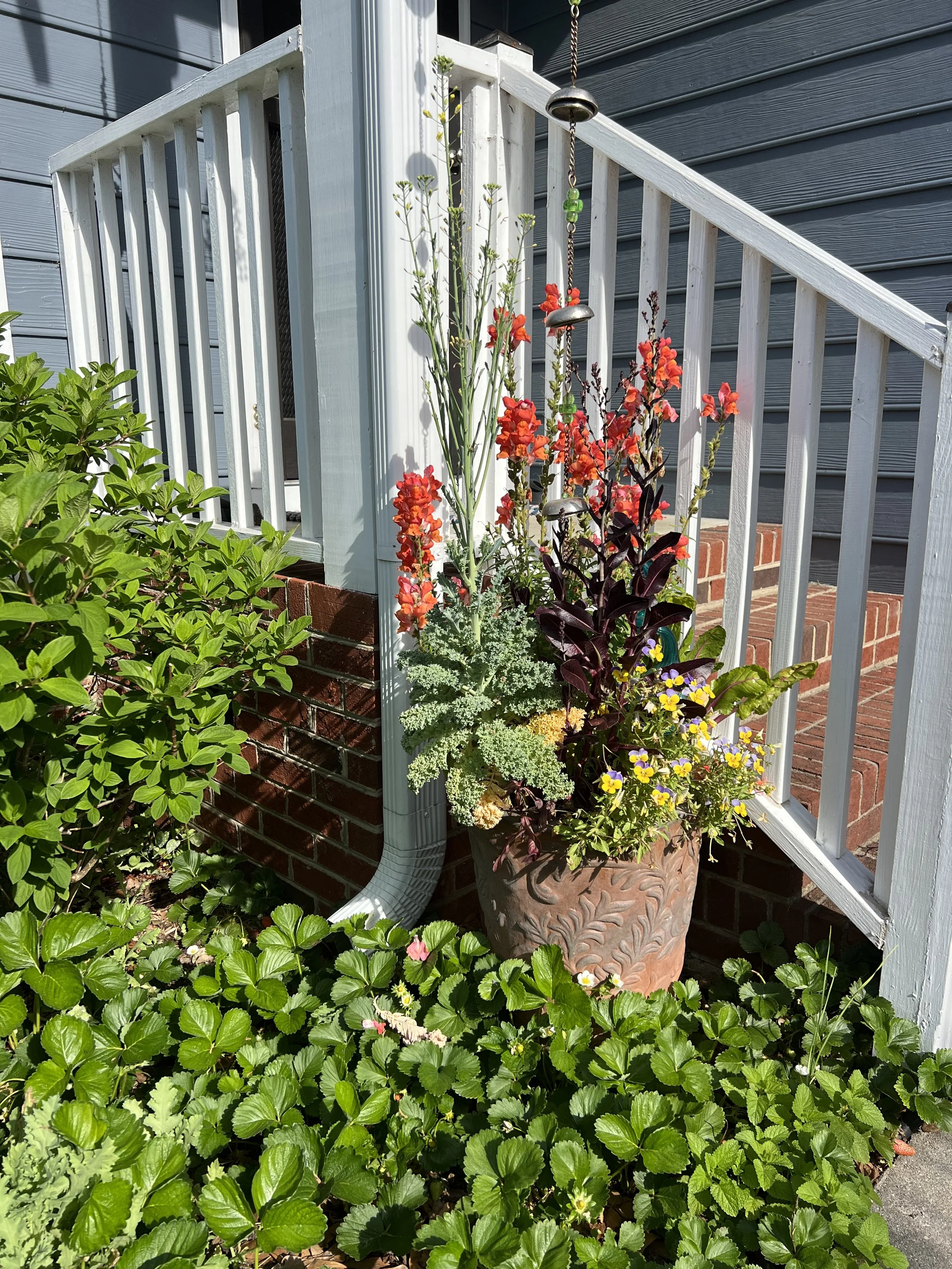
2. Refresh containers and beds with cool-season color
Violas, pansies, snapdragons, ornamental cabbage/kale, and evergreen sedges all handle January chill with ease. Keep containers watered—cold air is dry air—and remove any soggy foliage to prevent fungal issues like botrytis.
3. Start seeds for late-winter planting
Now is a great time to sow cold-tolerant crops like broccoli, cabbage, cauliflower, lettuce, spinach, kale, mustard, and swiss chard. You can sow these in trays and stash them inside under light, though I recommend keeping your trays outside so the plants are properly hardened off. This is one of the big advantages of gardening in the south. If we get very cold, you can bring the trays in, but these plants are better suited to grow outside all winter.
4. Prune selectively
Tackle dormant pruning on fruit trees, roses (later in the month), and summer-flowering shrubs. Avoid pruning anything that blooms on old wood like azaleas, Hydrangea macrophylla, viburnums, and camellias because you’ll remove spring buds.
5. Prepare soil for spring success
January is ideal for adding compost such as Soil³ to beds and pathways. Winter moisture helps organic matter integrate into the soil profile, improving structure, microbial activity, and nutrient availability by spring. Don’t miss out on their Early Bird Sale and use code BRIEGROWS26 for additional savings!

6. Protect tender plants during cold snaps
Have frost cloth or an old sheet ready for borderline perennials or new plantings. Covering plants traps radiant heat and prevents cold injury to leaf tissues. Avoid plastic directly on foliage as it can cause freeze burn. I recommend investing in “frost cloth” aka Remay which can be used for years to not only protect against cold but deter animals and insects! CLICK HERE TO PURCHASE
7. Stay ahead of winter weeds
This is one of the best months for weed control, brie. Cool-season weeds germinate in fall, stay low through winter, and explode with growth as soon as temperatures rise. Removing them now saves hours of frustration in March and April.
A few science-backed tips:
Hand pull after rain — moist soil helps roots release cleanly.
Mulch with compost — using Soil³ adds organic matter while reducing light penetration, slowing weed germination.
Address weeds before seed formation — many winter annuals disperse thousands of seeds by early spring, creating long-term seed-bank issues.
Use a weed knife or hori-hori for taproots that snap easily in dry soil.
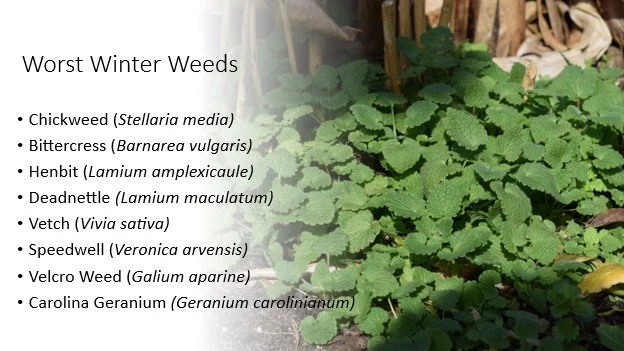
Top Ten Winter Weeds in North Carolina
These weeds thrive in disturbed, nutrient-rich soil and short winter days. Many complete their life cycle by April, so tackling them in January actually reduces weed pressure for the entire year.
These are the usual suspects in January:
Hairy bittercress (Cardamine hirsuta)
Chickweed (Stellaria media)
Henbit (Lamium amplexicaule)
Deadnettle (Lamium purpureum)
Annual bluegrass (Poa annua)
Wild mustard / wild radish (Raphanus raphanistrum)
Shepherd’s purse (Capsella bursa-pastoris)
Carolina geranium (Geranium carolinianum)
Speedwell (Veronica spp.)
Creeping buttercup (Ranunculus repens) — especially in damp, compacted soils
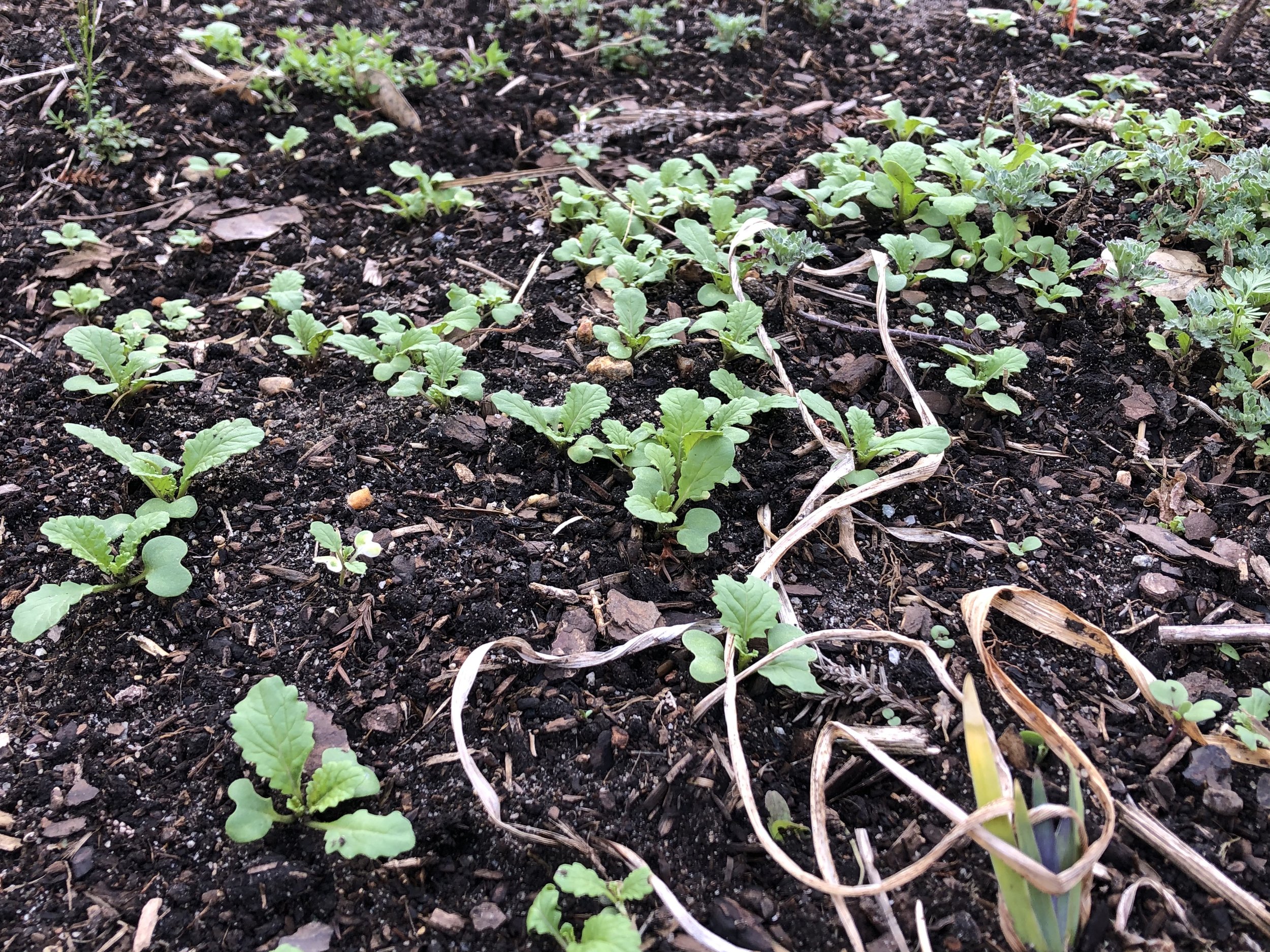
8. Sow cottage garden seeds
This approach to ground plane coverage is the least expensive, easiest way to reduce weeds and create a lush spring flowering border than pollinators and people will enjoy! Since this is a standalone topic, I will direct you to this blog for STEP-BY-STEP SEEDING INSTRUCTIONS.
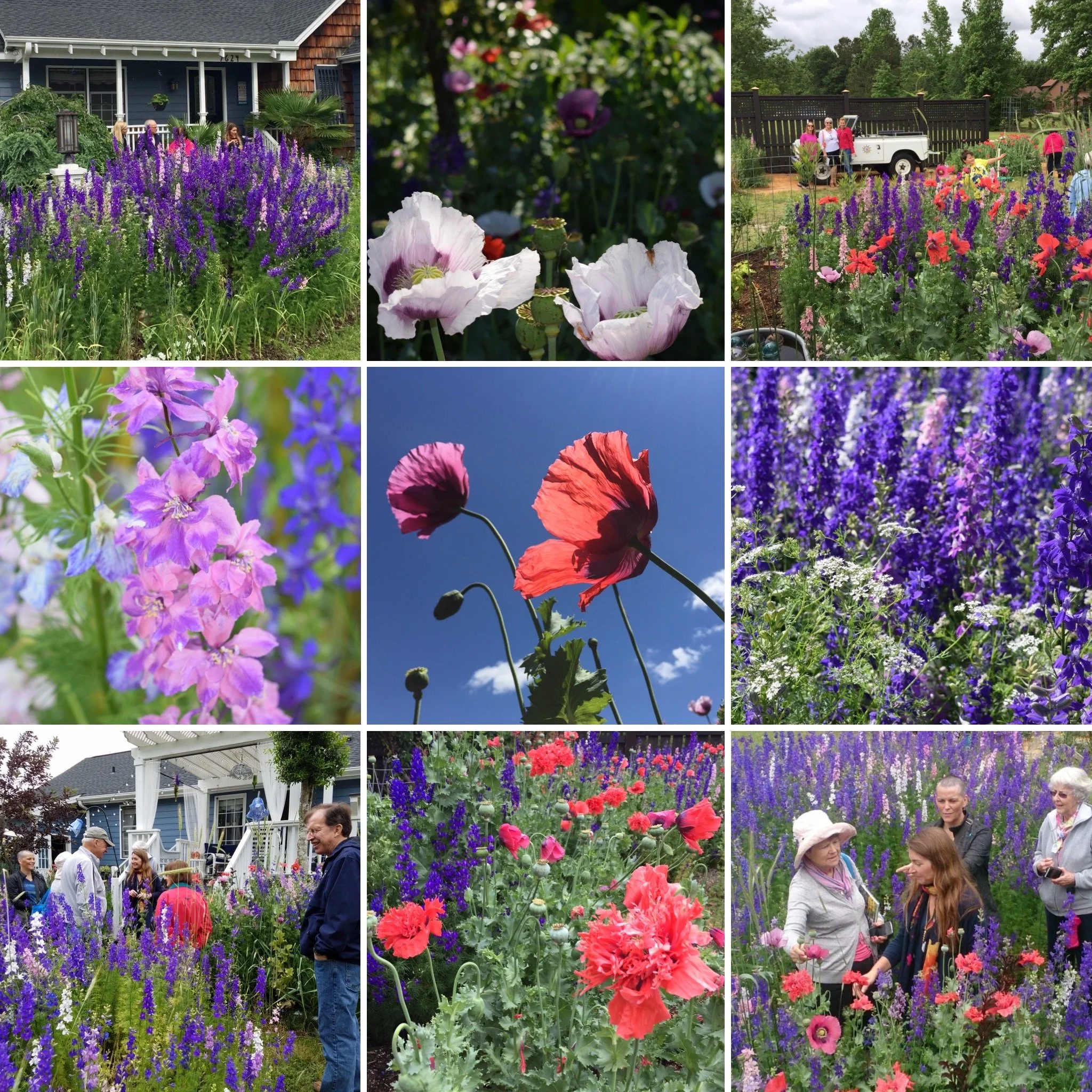
As we ease into a fresh year, I hope this month’s tips inspire you to get outside, breathe in the cool air, and enjoy the subtle beauty that winter brings. January may feel quiet, but it’s a powerful time to set the stage for everything that will flourish in spring. From direct seeding cottage favorites to pulling a few winter weeds, every small task you do now pays off in big, colorful ways later.
Thanks for being part of this growing community and for following along on my gardening adventures. I’m excited to reactivate the blog and share monthly updates with you. There is so much to look forward to as the days slowly lengthen.
Wishing you a peaceful, hopeful, and garden-filled start to the new year. Spring is just around the corner!