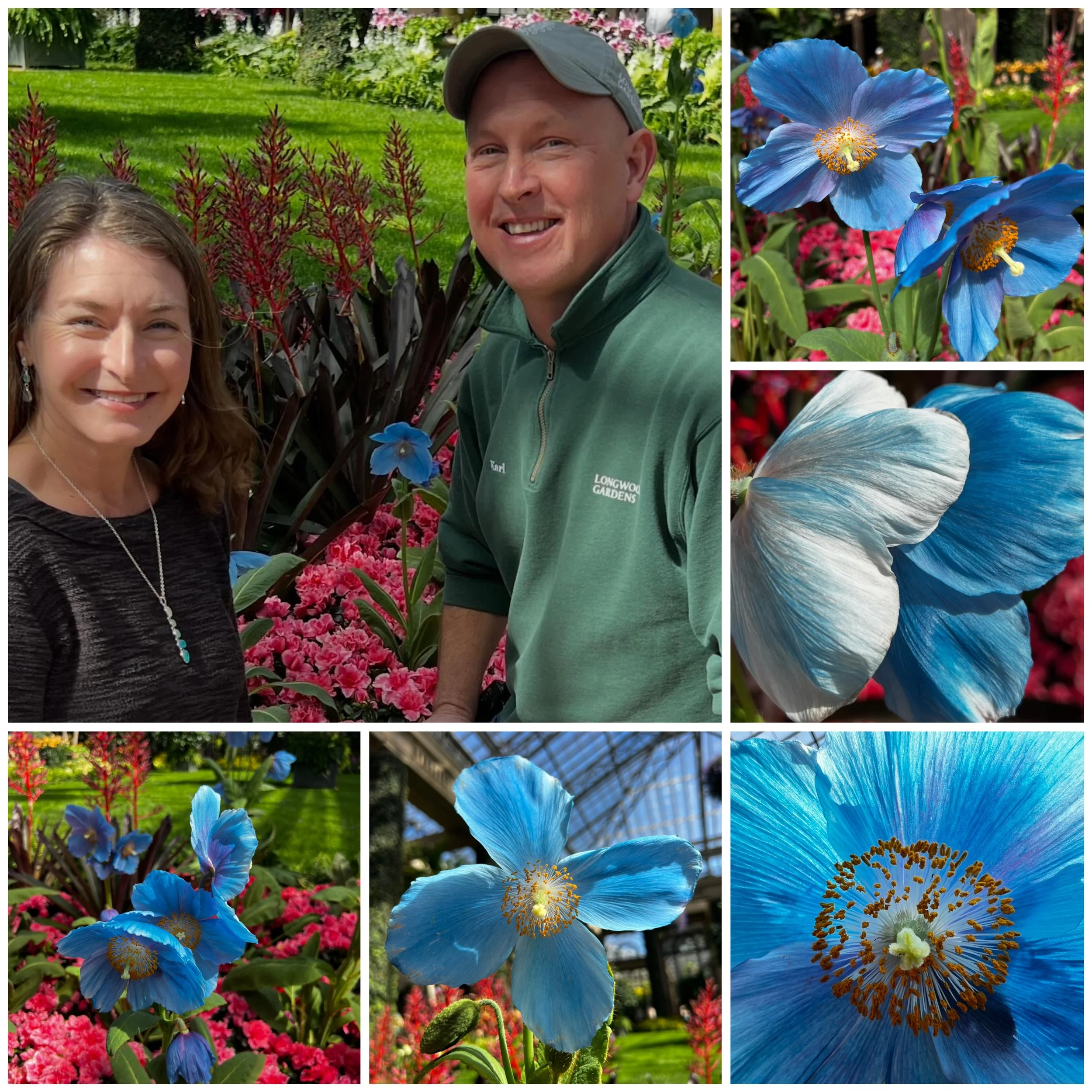
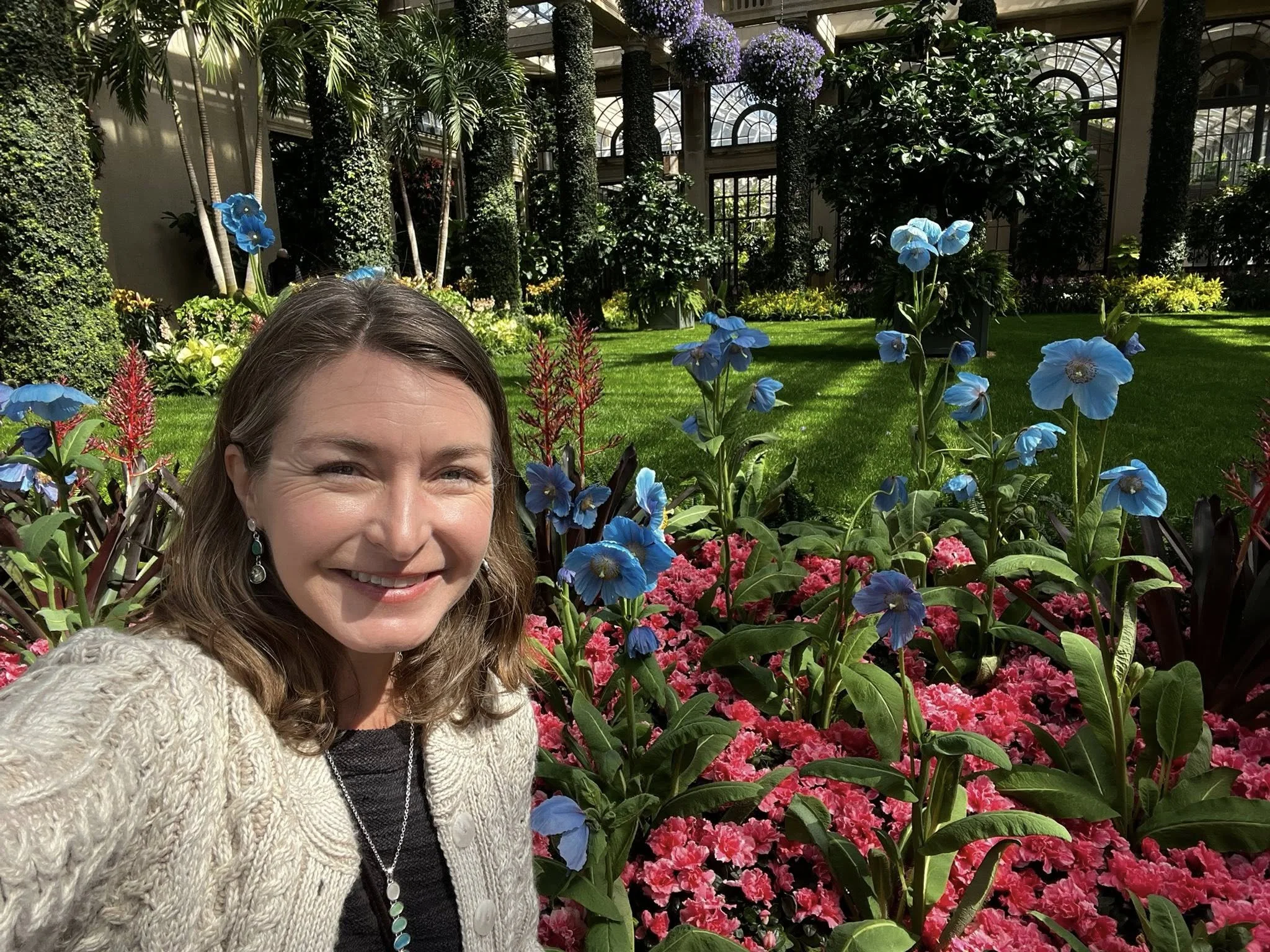
To say my first day of spring 2026 was special feels like quite the understatement. I found myself once again in the magical conservatories of Longwood Gardens, arriving just in time for their celebrated blue poppy display. For years, I had admired these legendary blooms from afar through photos, articles, and the shared excitement of other gardeners on social media but had never experienced them in person.
Nothing could have prepared me for the reality. Seeing Meconopsis in full bloom, glowing in that surreal shade of blue, was nothing short of breathtaking. I spent six hours wandering through the conservatory, circling back again and again, completely captivated. I took hundreds of photos and even recorded video, knowing this was a moment I would want to revisit for years to come.
Few plants inspire as much admiration, and frustration, as the legendary Himalayan blue poppy, Meconopsis. Widely regarded as one of the most coveted blooms in horticulture, its luminous, sky-blue petals almost appear unreal, as if painted into the landscape rather than grown from it.
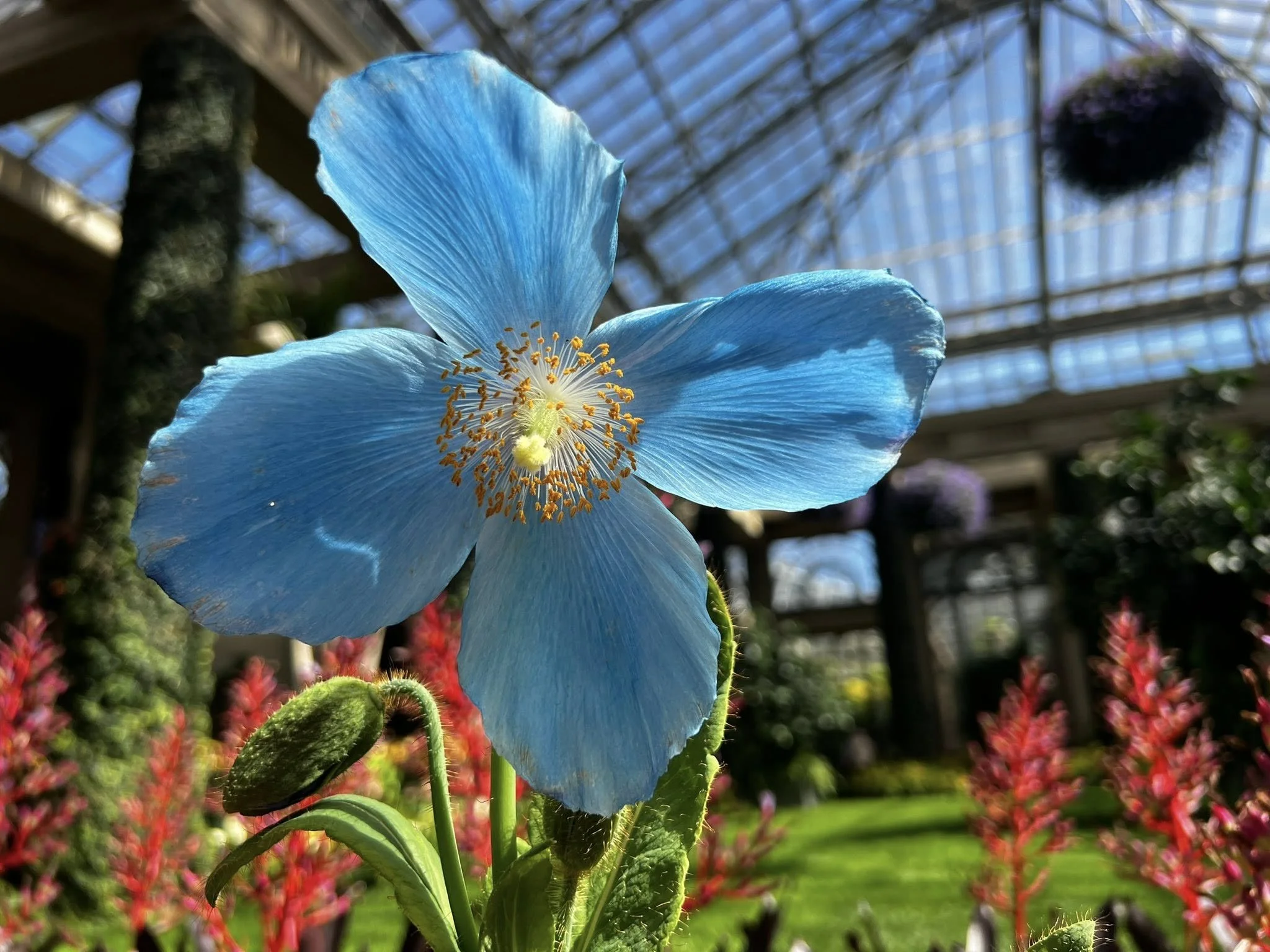
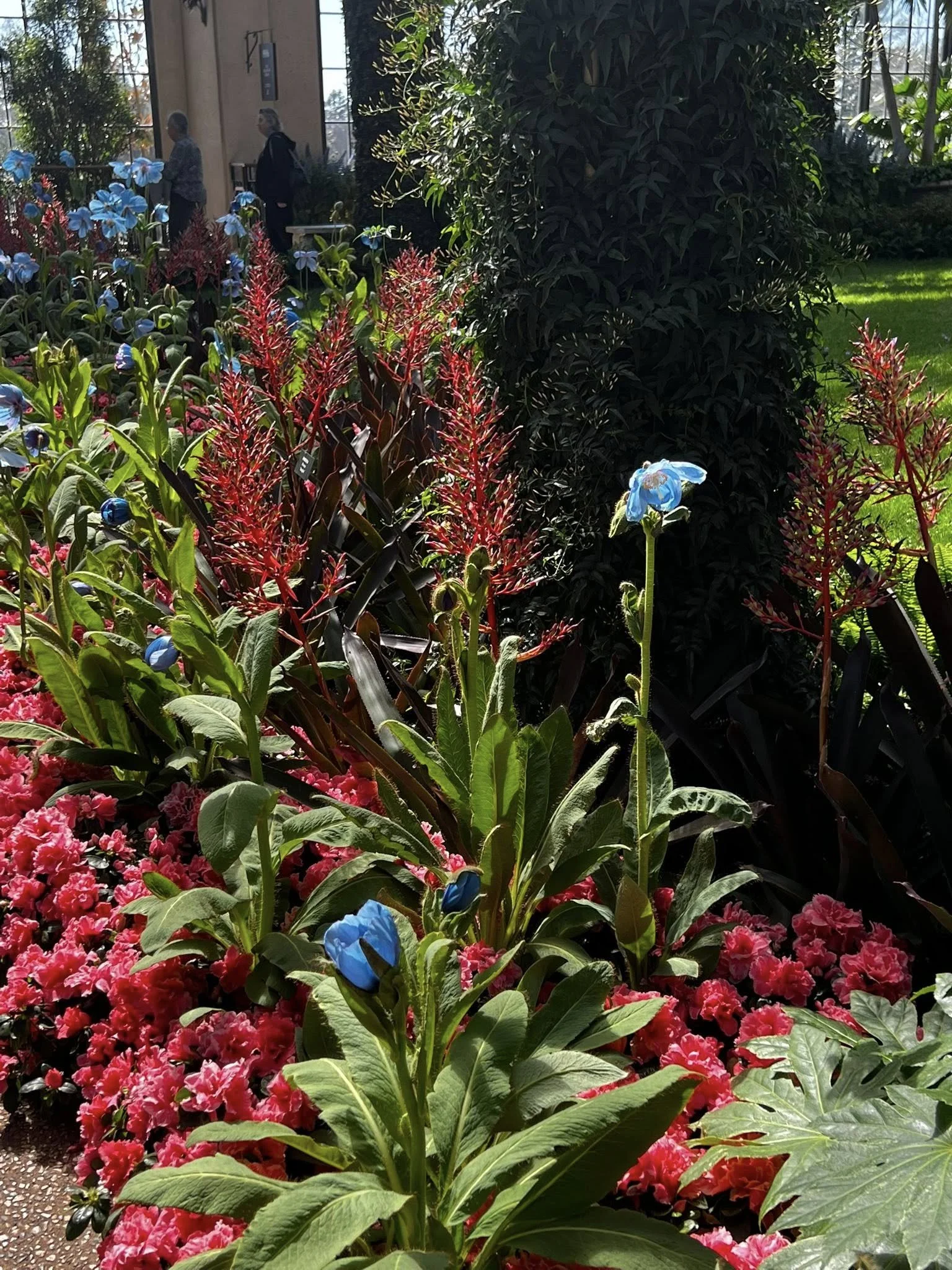
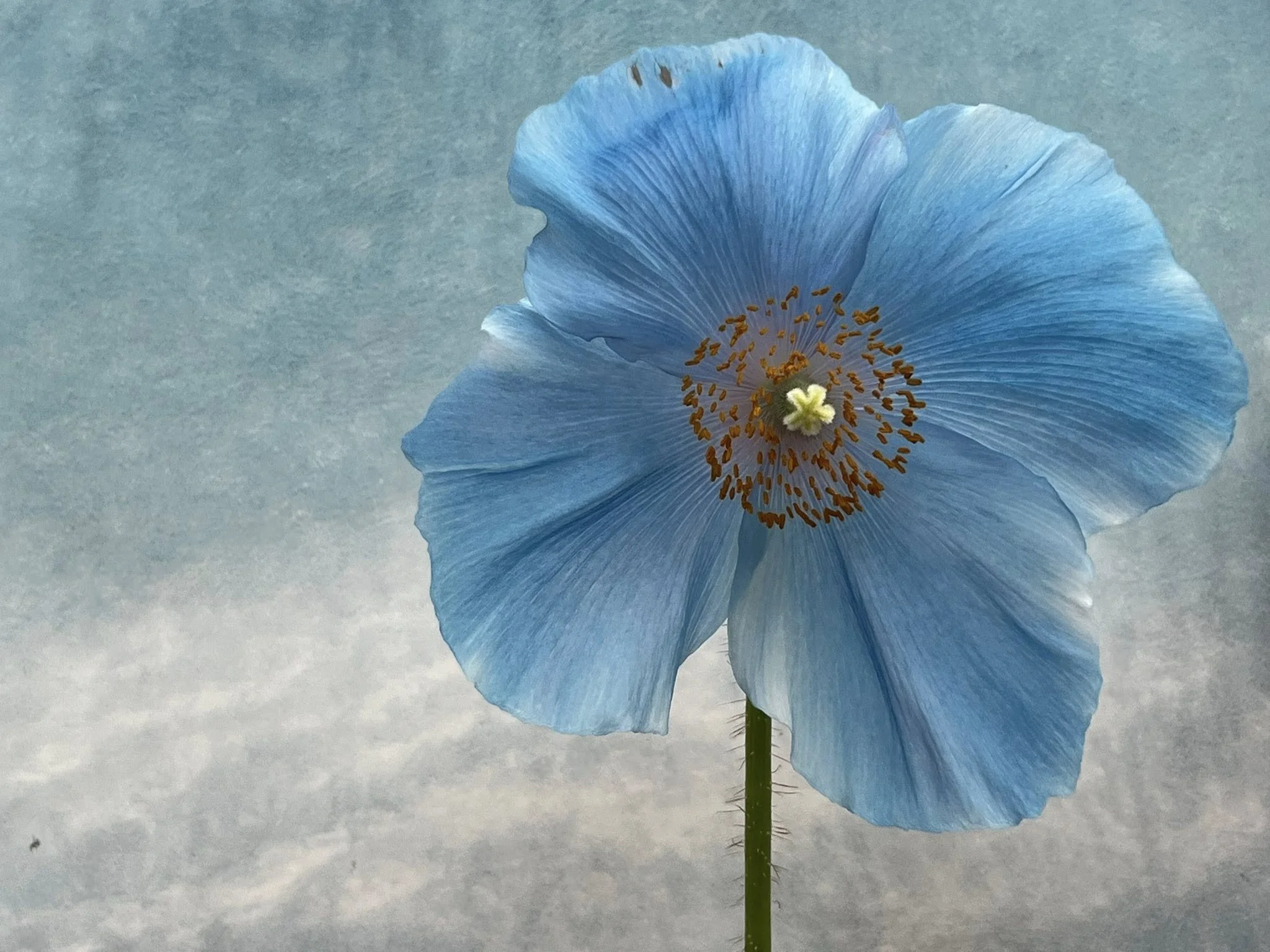
The first photo I snapped of the blue poppy against the matching sky above the conservatory glass at Longwood Gardens
A Plant Shaped by the Himalayas
To understand Meconopsis, it helps to start where it comes from. Native to the eastern Himalayas, this species evolved in a climate that is consistently cool, moist, and humid, often shrouded in fog and cloud cover. Summers are mild, sunlight is filtered, and soils are rich in organic matter from centuries of decomposing plant material. The air is rarely dry, and temperatures seldom spike the way they do in much of the United States.
That origin story explains everything about how this plant behaves in cultivation.
When we try to grow Meconopsis outside of those conditions, especially in hot, humid climates like the Southeast we are essentially asking an alpine plant to perform in an environment it was never designed to tolerate. Heat stress, fluctuating moisture, and warm nighttime temperatures all work against it.
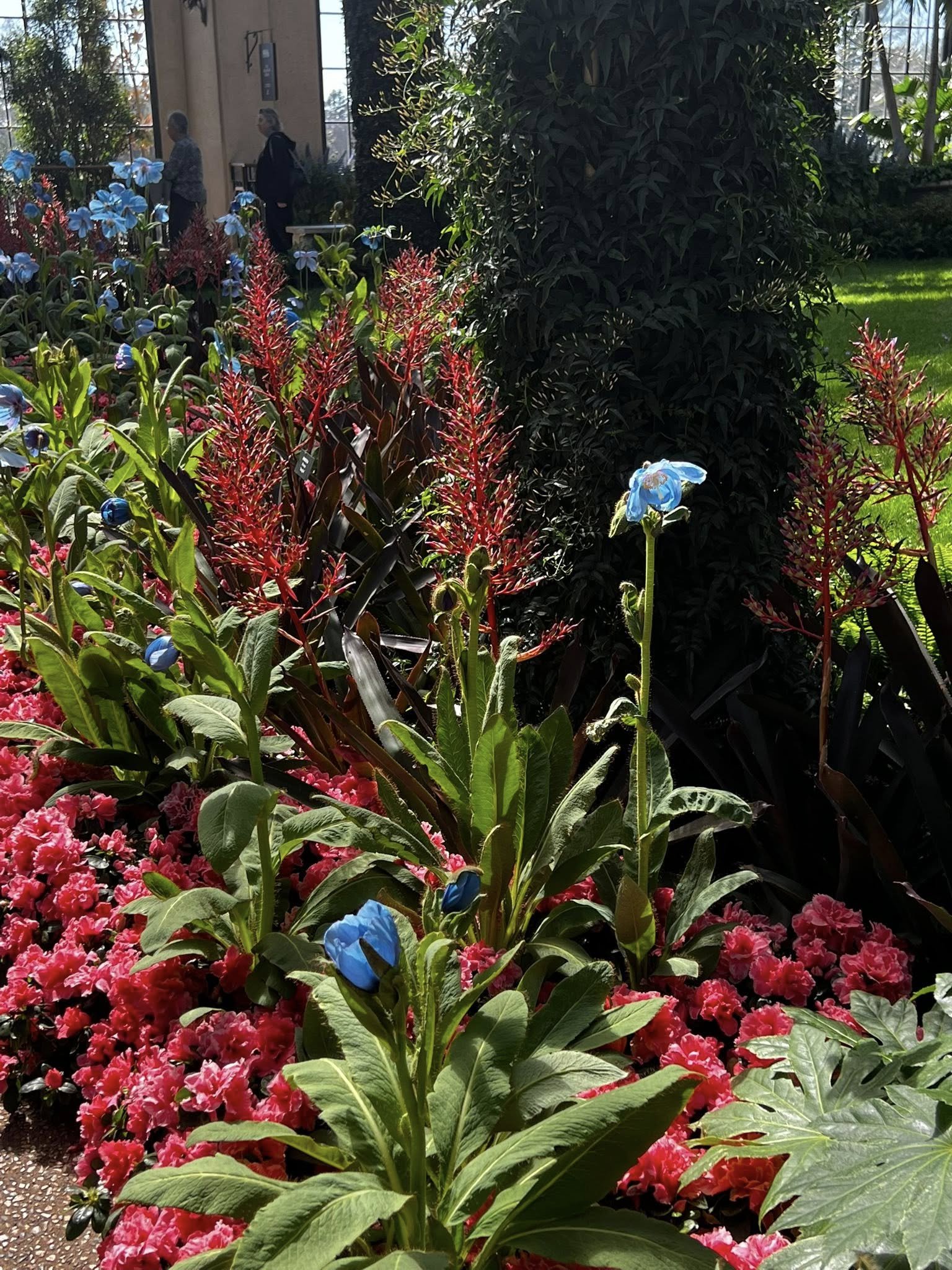
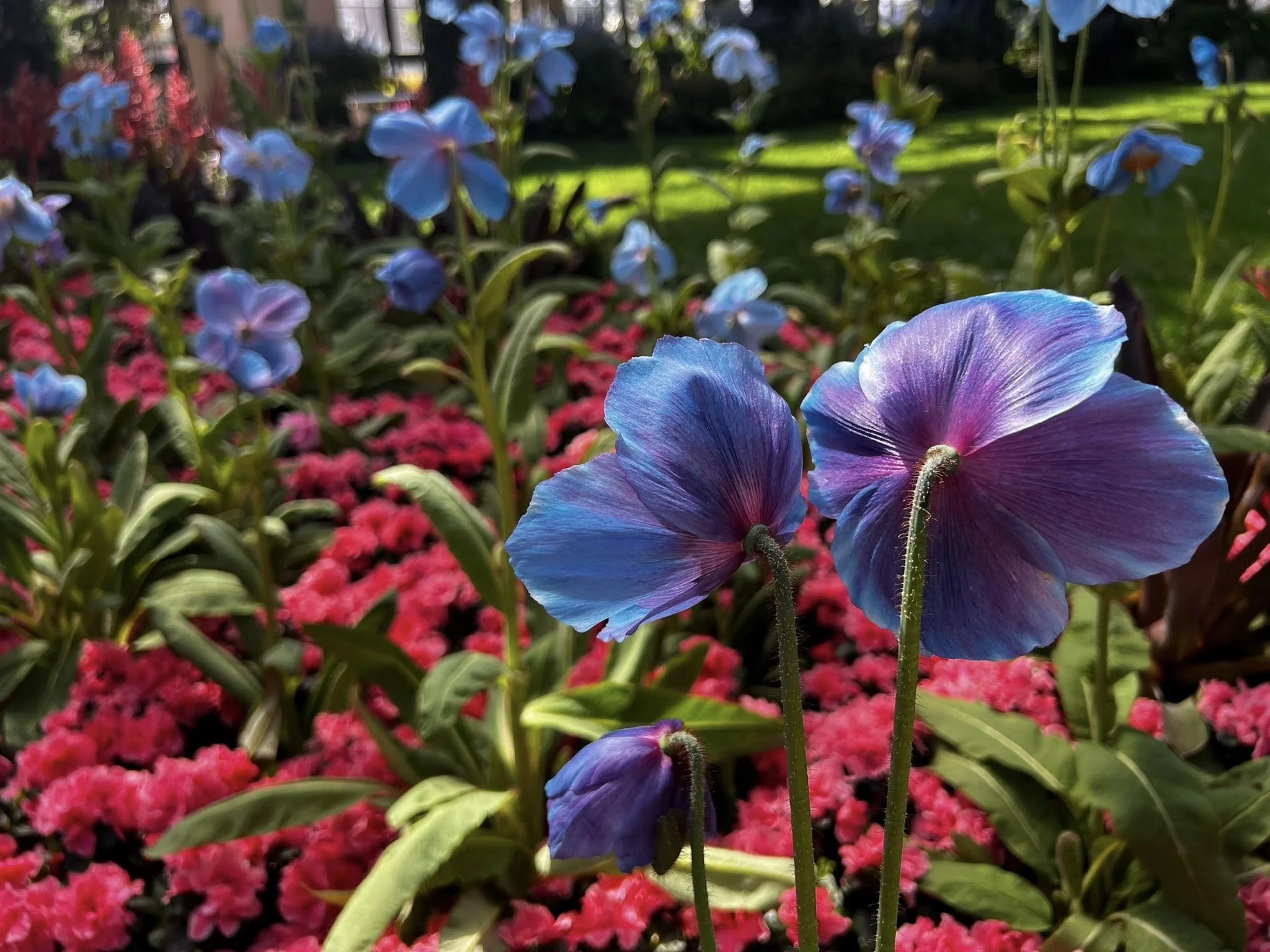
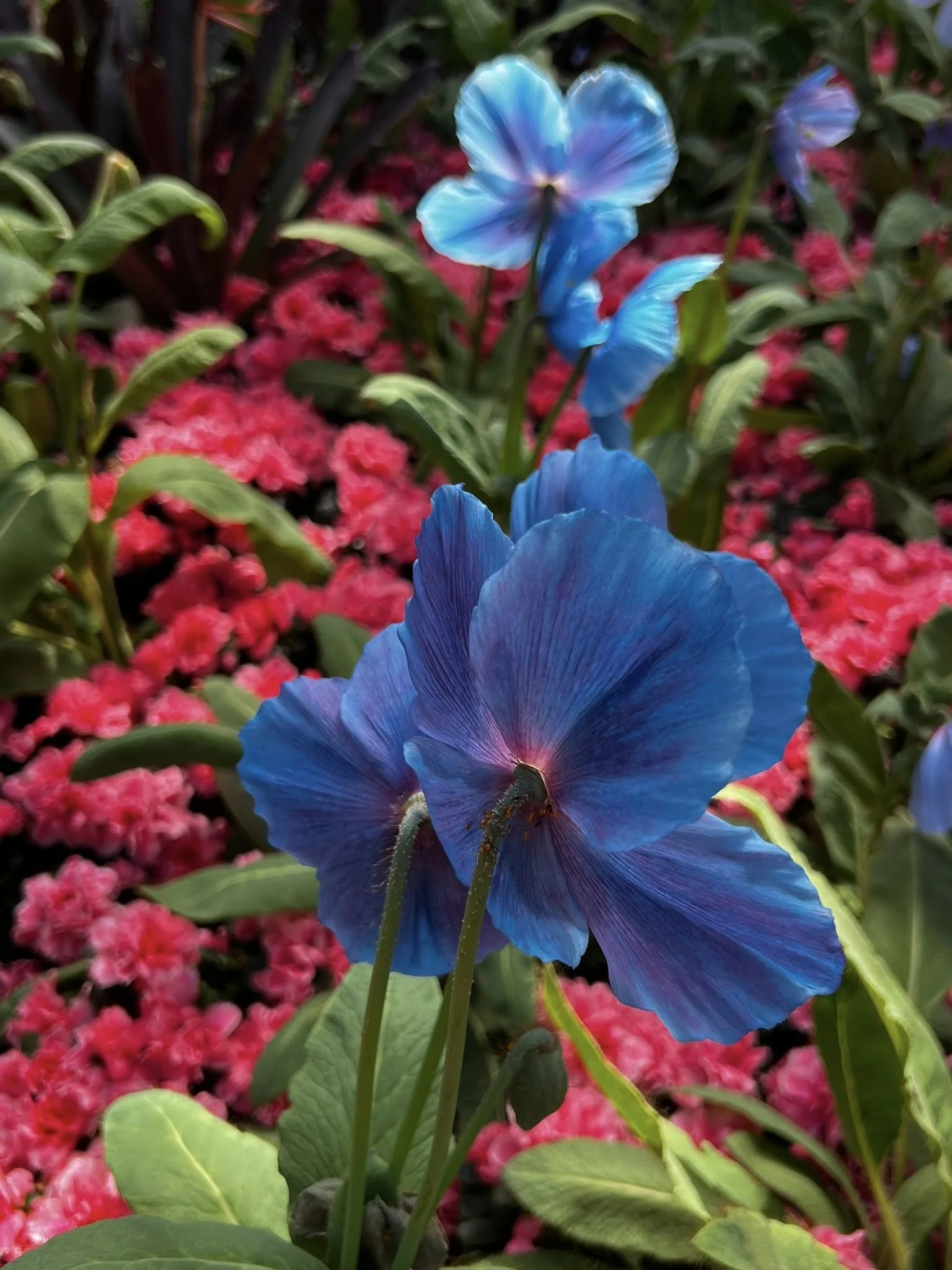
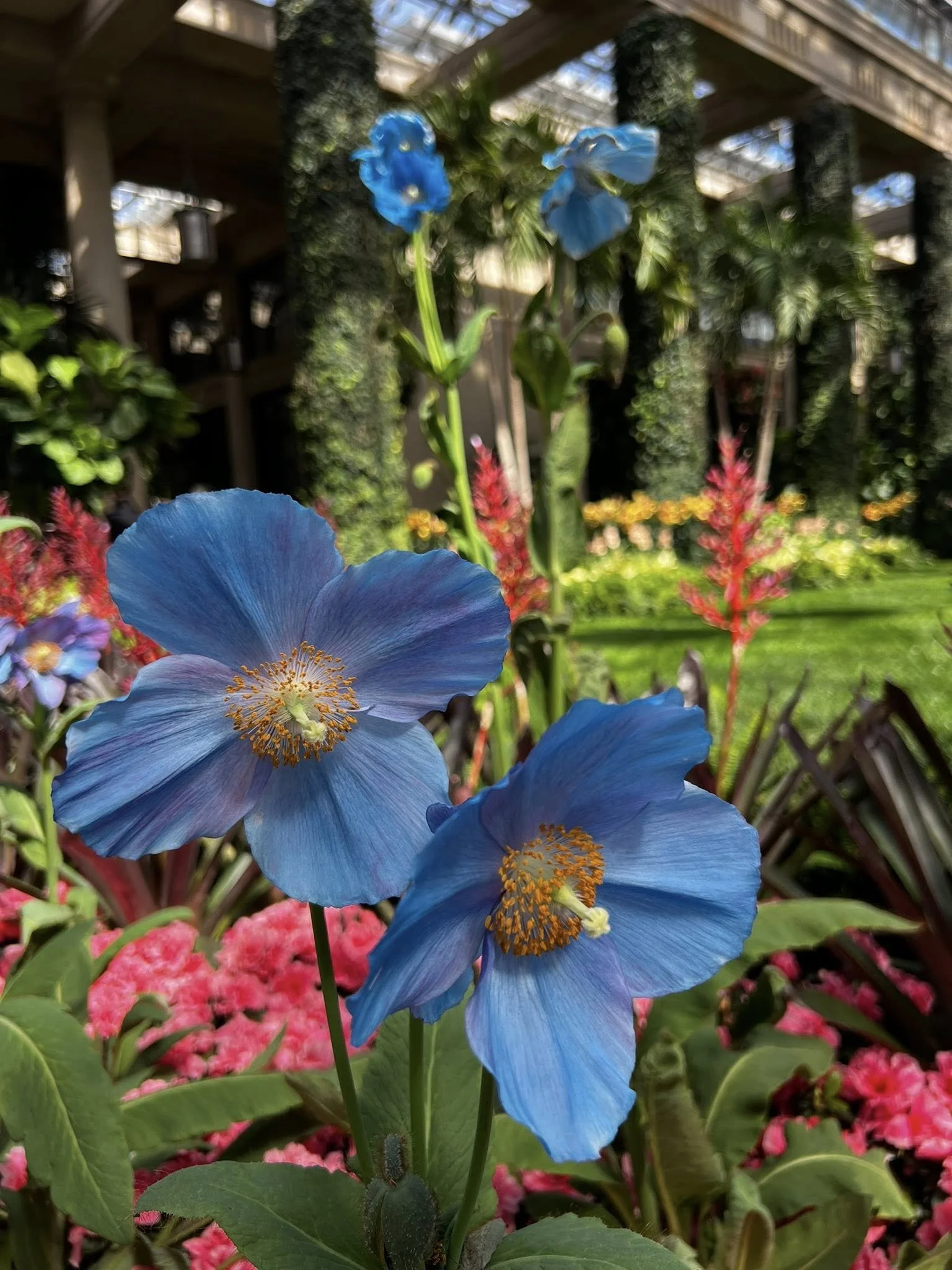
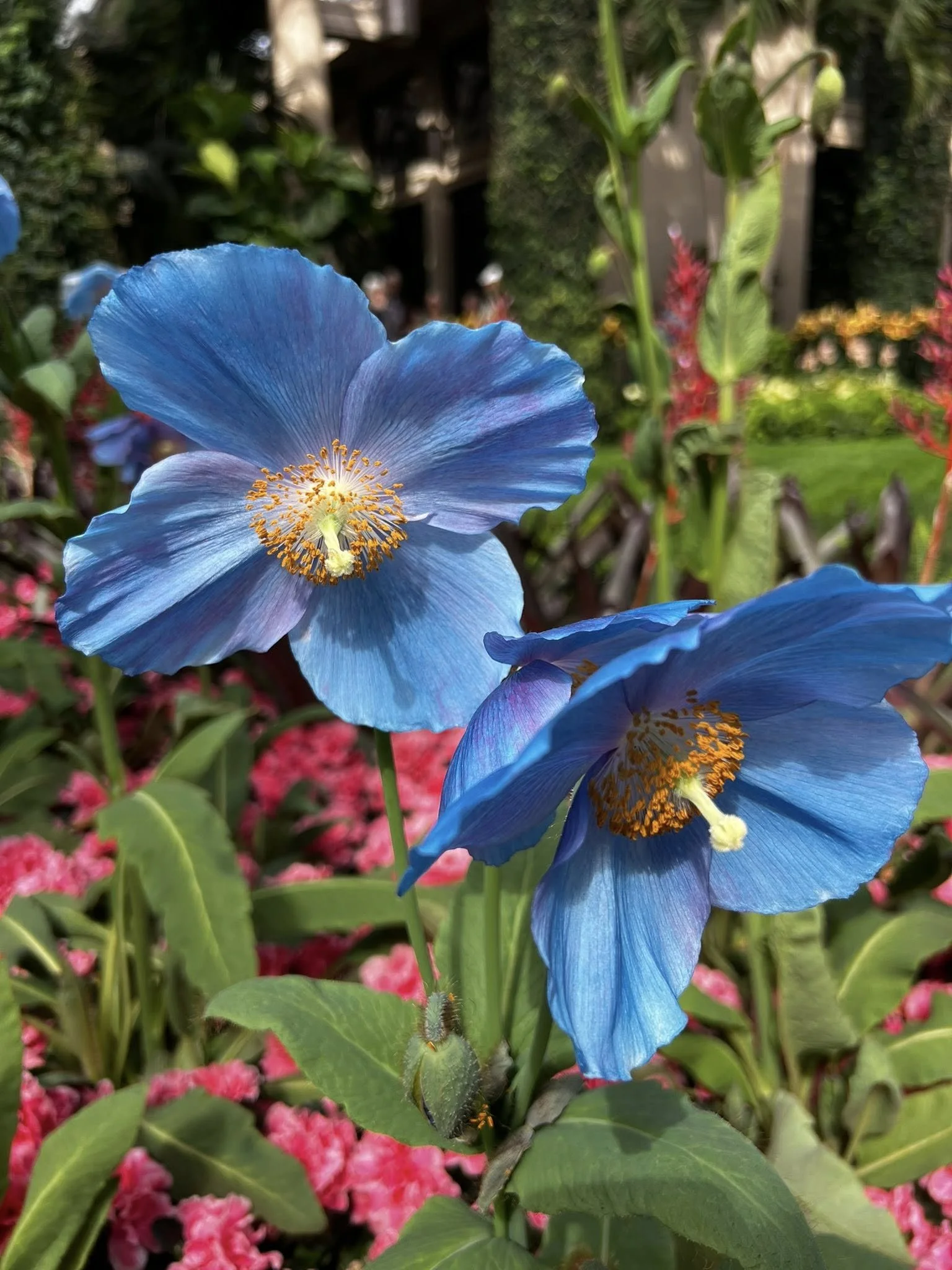
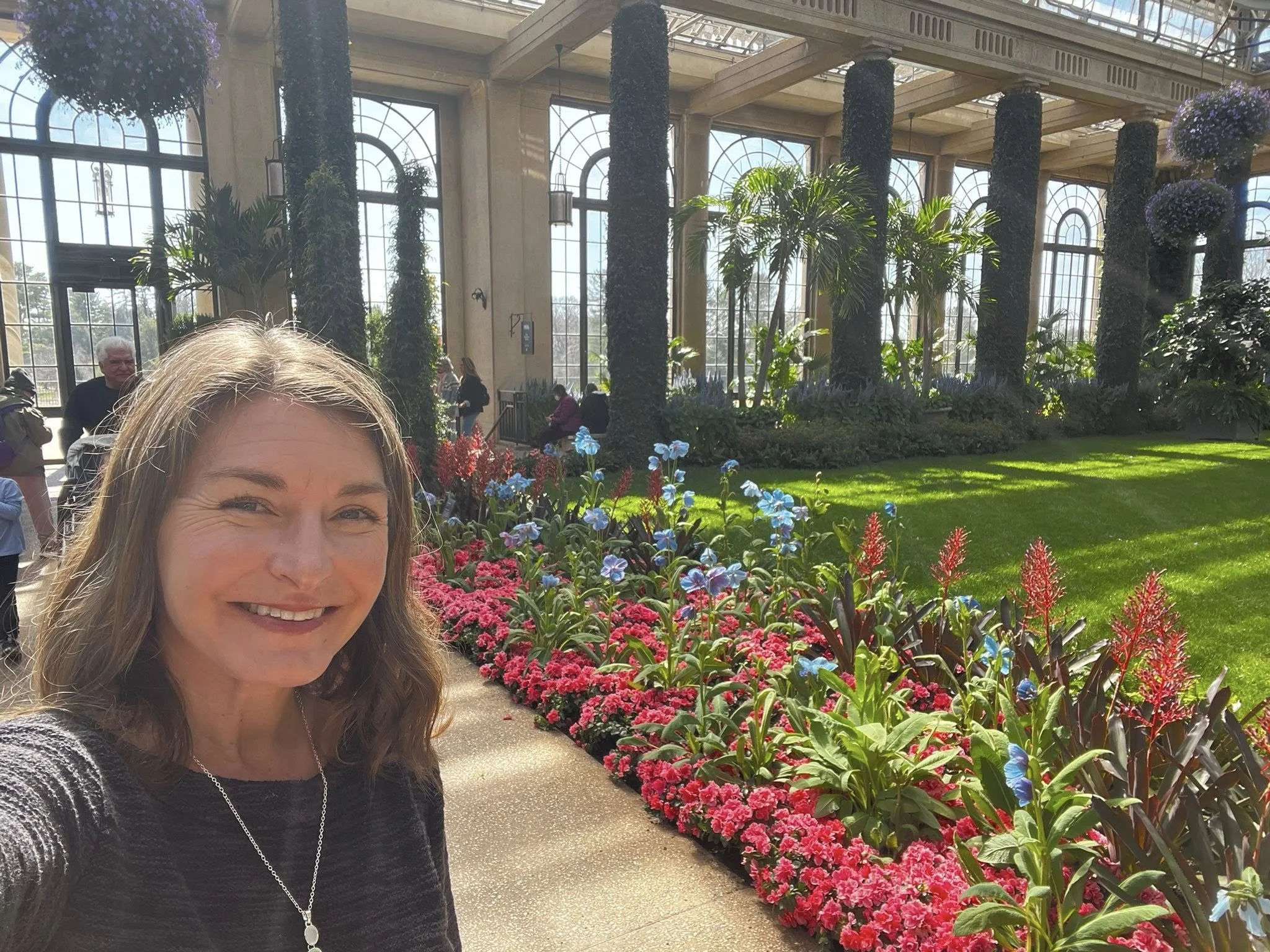
In these cool, moist regions of the eastern Himalayas, Meconopsis evolved in an environment defined by consistent moisture, high humidity, and cool temperatures. To succeed with this plant, gardeners must recreate that delicate balance: rich, well-drained soil layered with organic matter, steady moisture without saturation, and protection from both intense sun and drying winds. In many ways, the ideal setting is a woodland edge softened by mountain-like conditions with filtered light, cool roots, and humid air. Or in this case, the Longwood Conservatory main entrance!
Botanical Profile
For those willing to take on the challenge, here’s what you need to know:
Family: Papaveraceae
Type: Short-lived perennial (often behaves as a biennial)
Light: Part shade to dappled light
Soil: Deep, humus-rich, well-drained but consistently moist
Bloom Time: Late spring to early summer
Height: 2–4 feet in flower
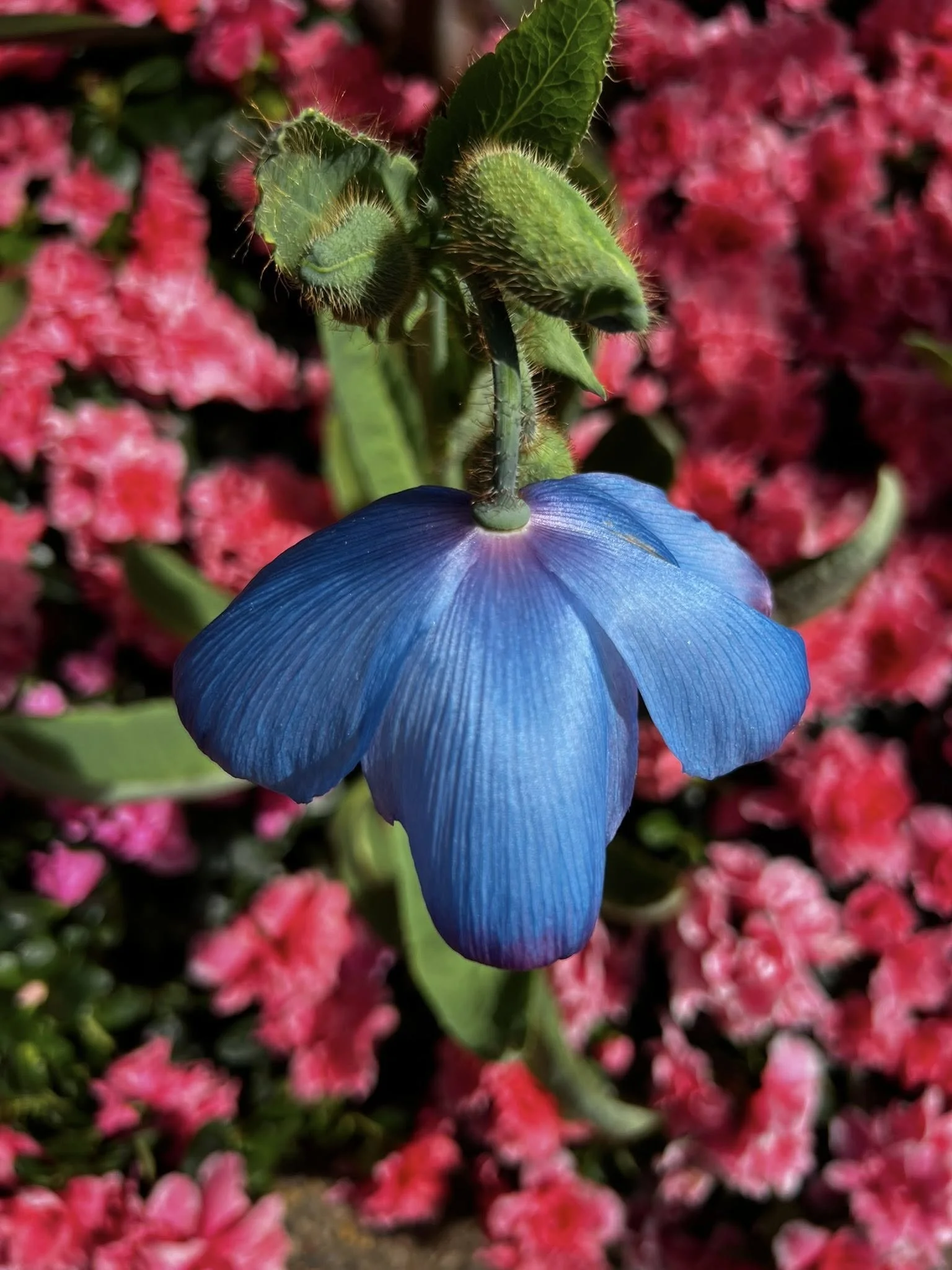
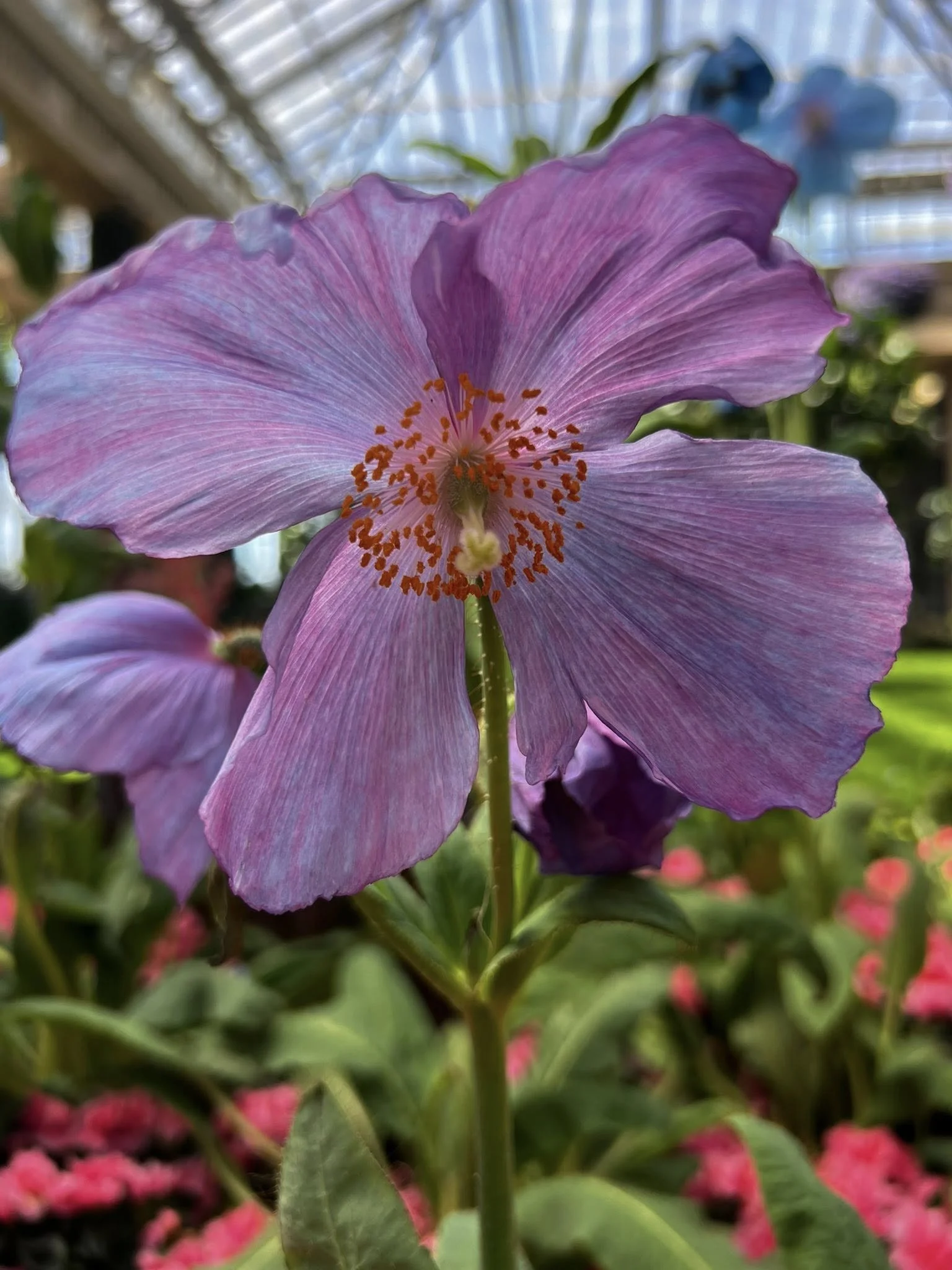
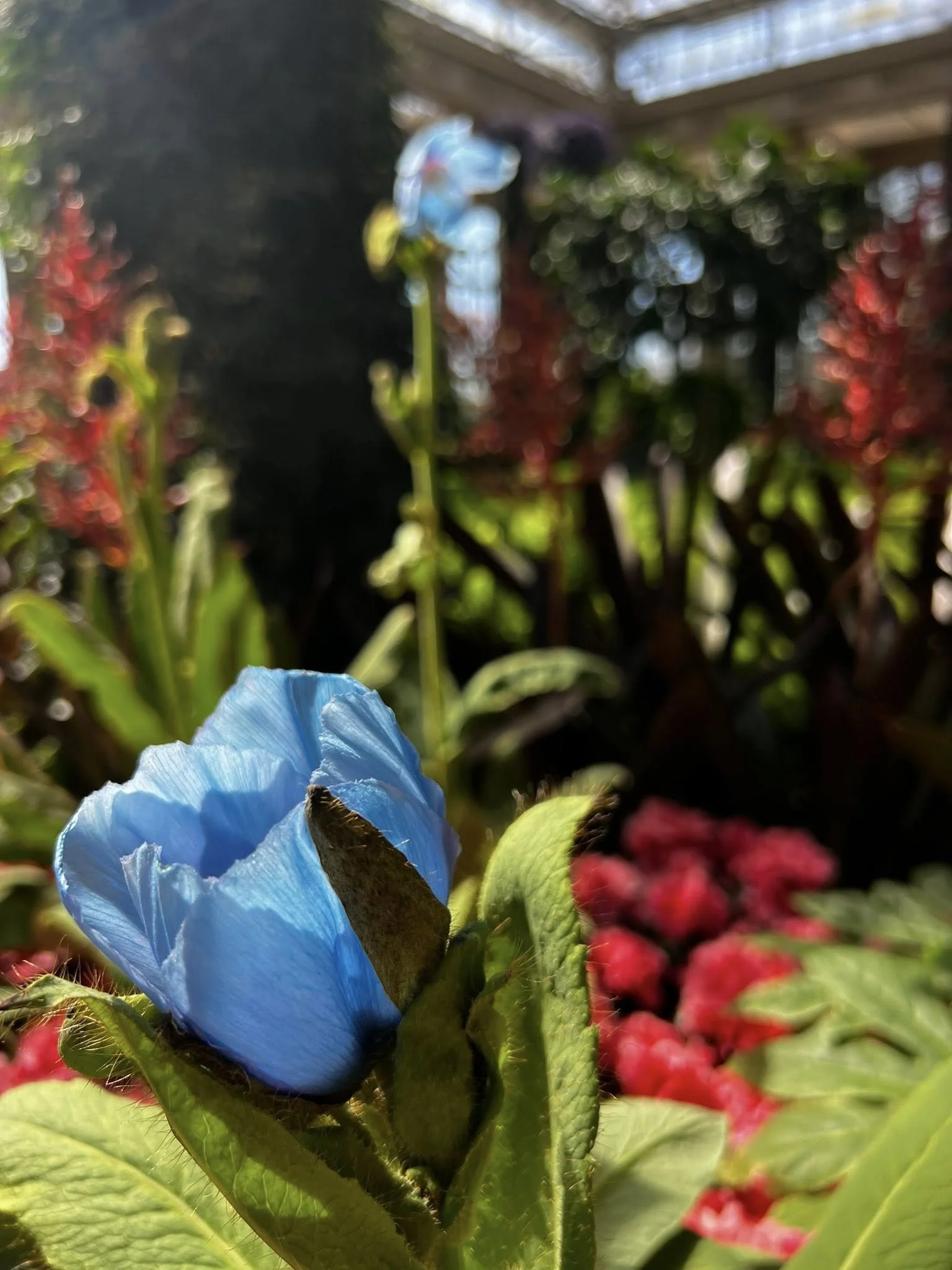
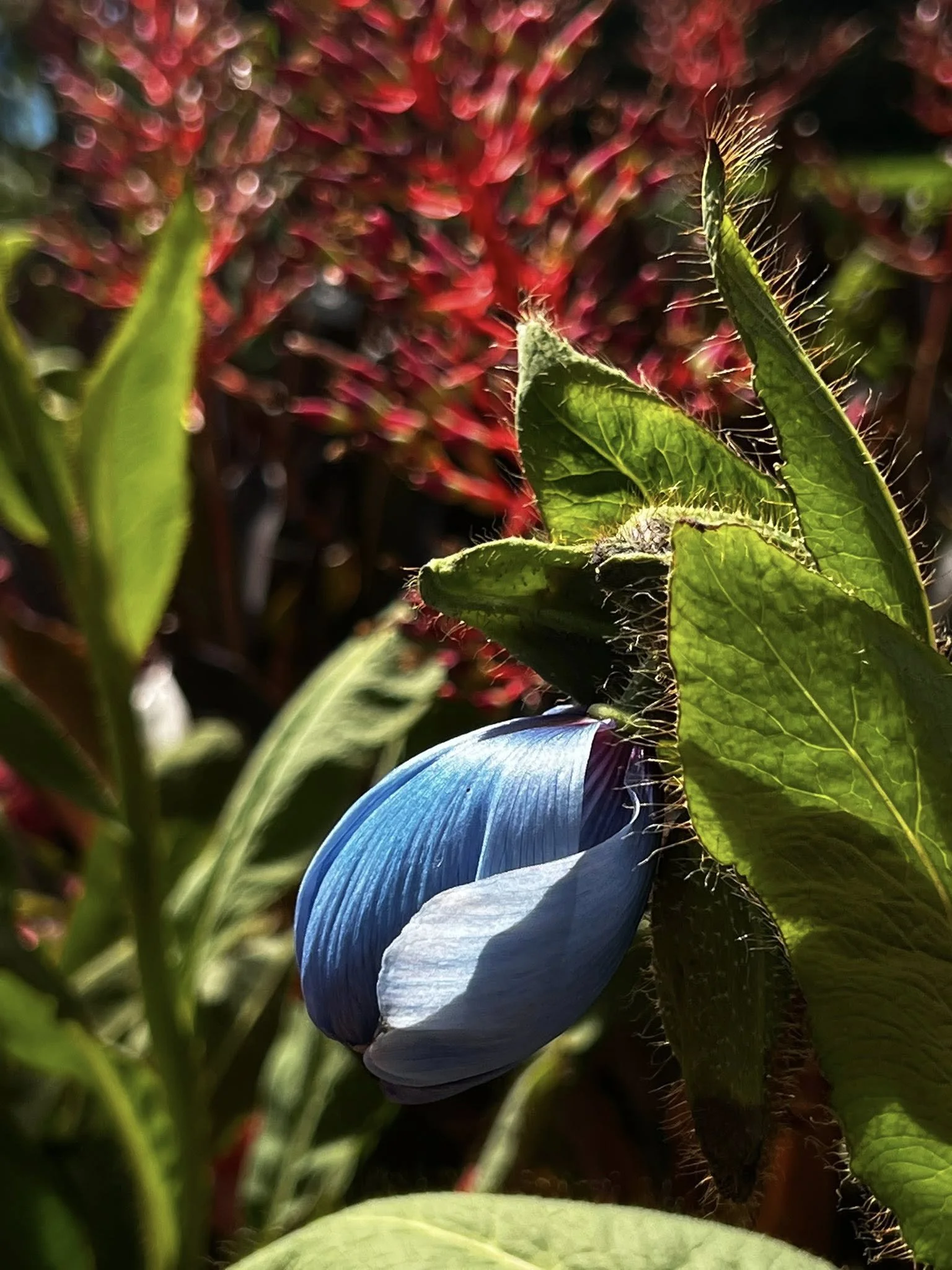
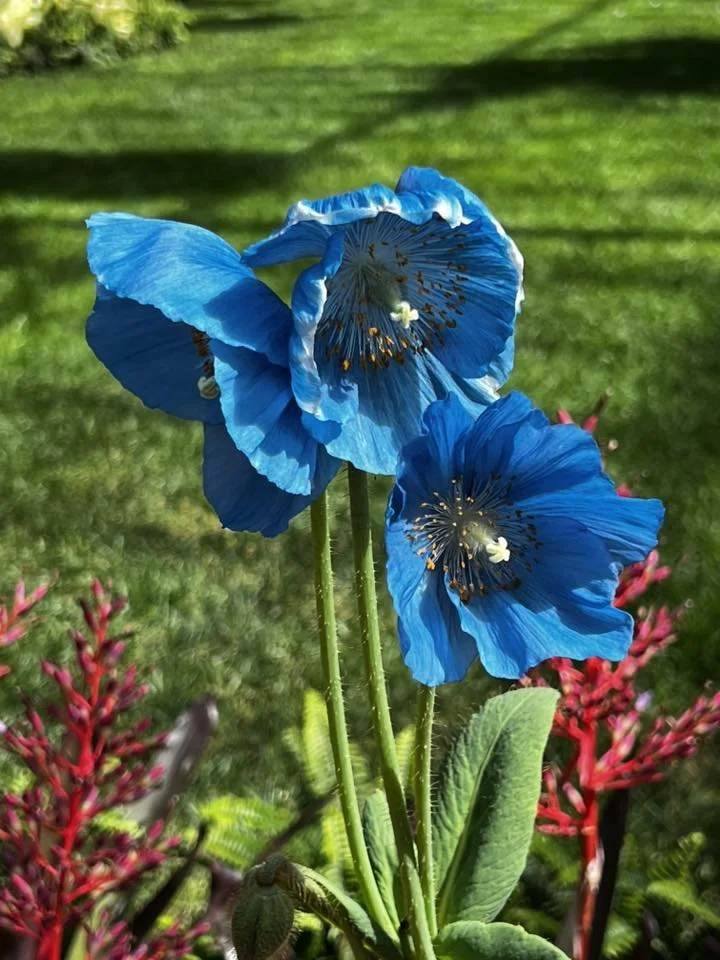
Plants typically form a basal rosette of soft, slightly hairy leaves before sending up tall flower stalks. Each stem carries those iconic, silky blooms—often with a golden center that contrasts beautifully with the blue petals.
In ideal conditions, plants may self-sow lightly, creating small colonies over time. In less-than-ideal climates, however, they often bloom once and fade away, reinforcing their reputation as fleeting treasures.
The genus Meconopsis includes more than 50 species, but only a select few have made their way into ornamental horticulture. The most iconic is Meconopsis betonicifolia (often still listed as M. baileyi), prized for its clear sky-blue flowers and commonly featured in public garden displays. Other notable species include Meconopsis grandis, which offers larger, more intensely colored blooms but can be even more temperamental, and Meconopsis cambrica, the Welsh poppy, which is far more adaptable but trades blue for cheerful yellow or orange flowers.
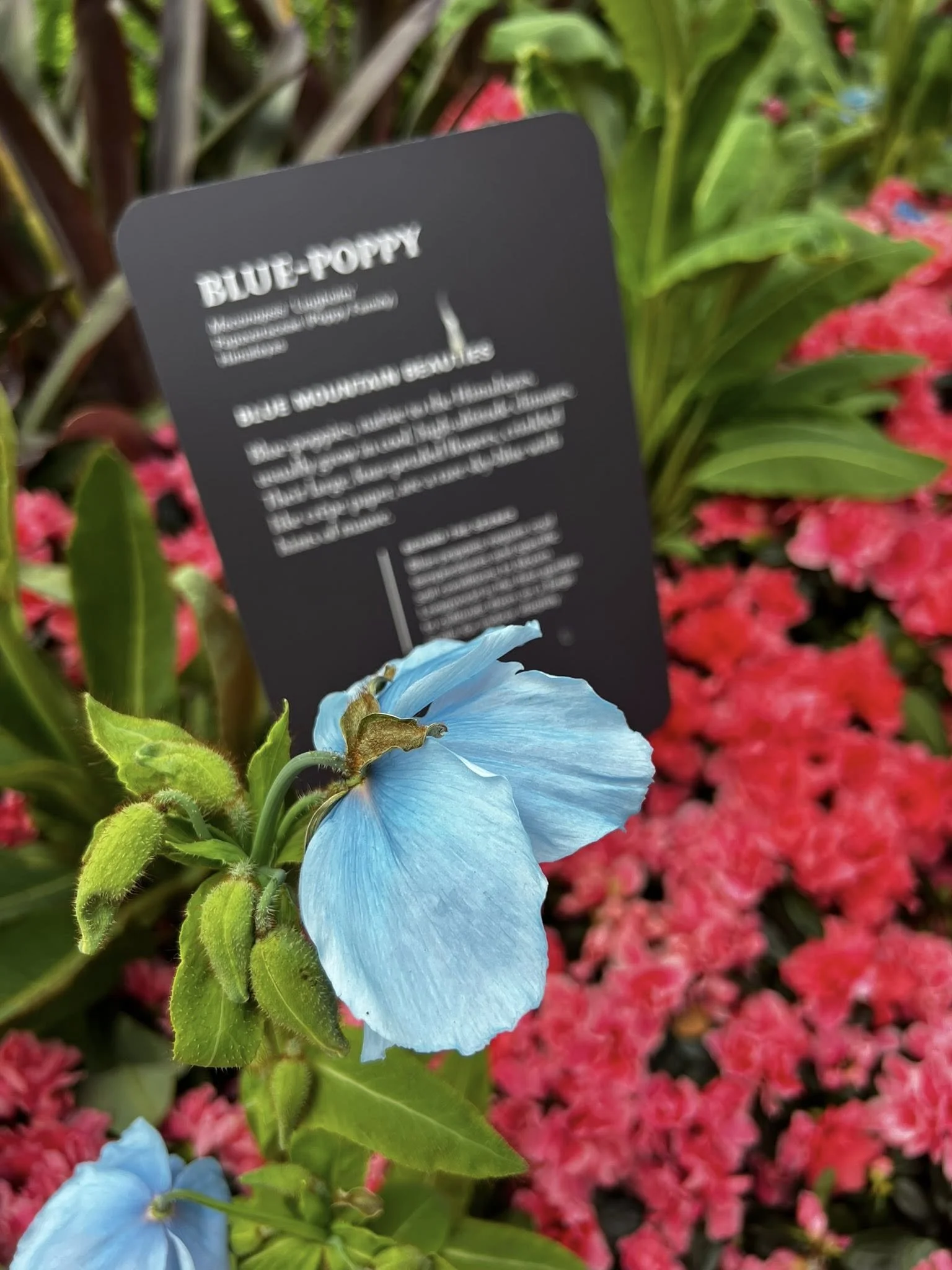
In cultivated settings, especially in renowned displays like those at Longwood Gardens, hybrids and selected cultivars play an essential role. These have been bred for improved vigor, more reliable flowering, and slightly broader environmental tolerance, while still preserving that coveted blue coloration. ‘Lingholm’ is one of the most famous and widely grown selections, which what was on display here. This SEED GROWN selection is known for improved vigor and more reliable performance, with large, clear sky-blue flowers and is often considered one of the best for gardeners attempting blue poppies outside ideal climates.
Named selections within the M. grandis and M. betonicifolia groups are often used to create uniform, high-impact displays, demonstrating how thoughtful breeding can make even the most elusive plants just a bit more accessible for gardeners and institutions alike. Even with these improvements, though, Meconopsis still walks that fine line between cultivated plant and alpine diva, which, honestly, is part of the appeal.
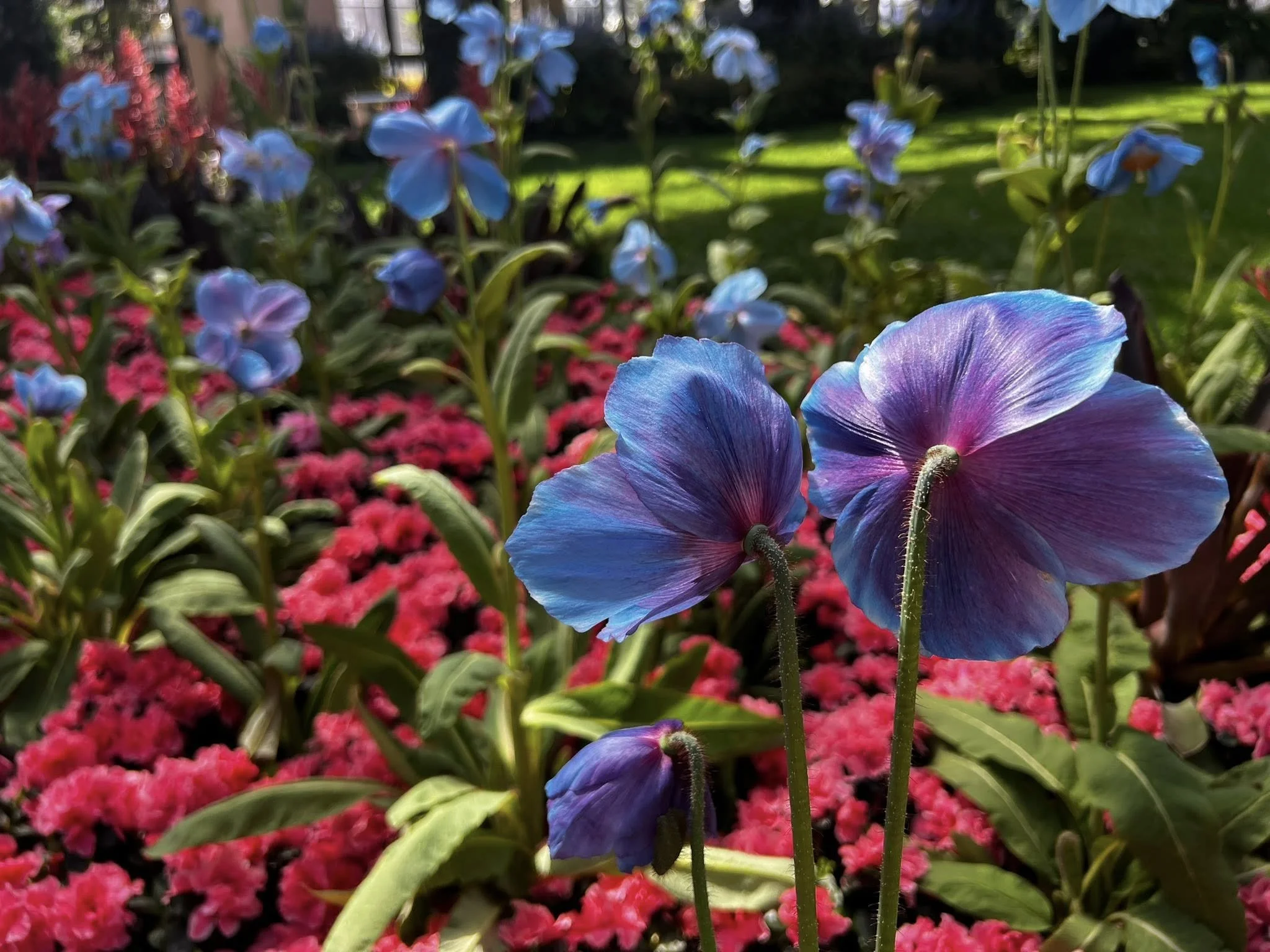
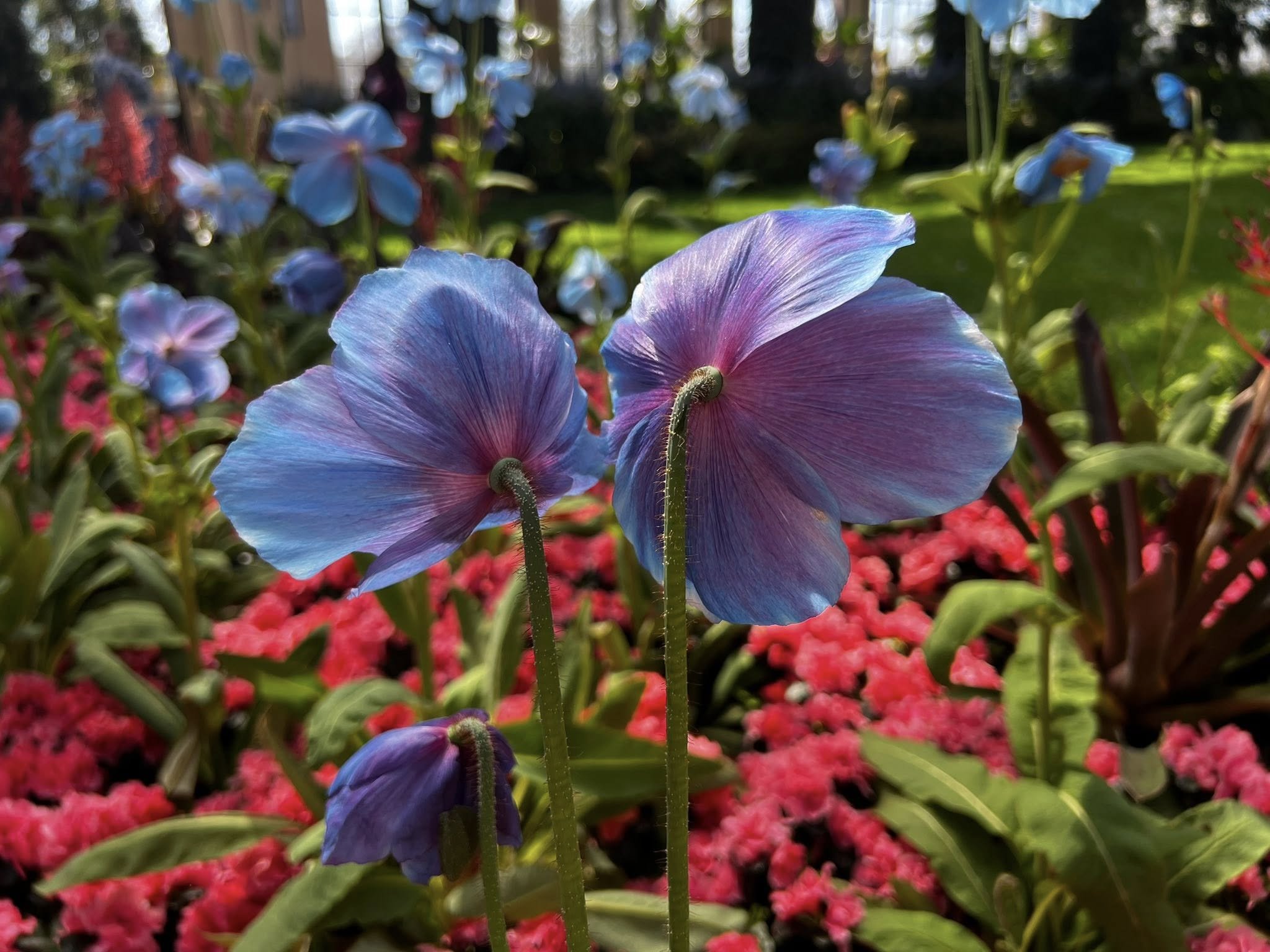
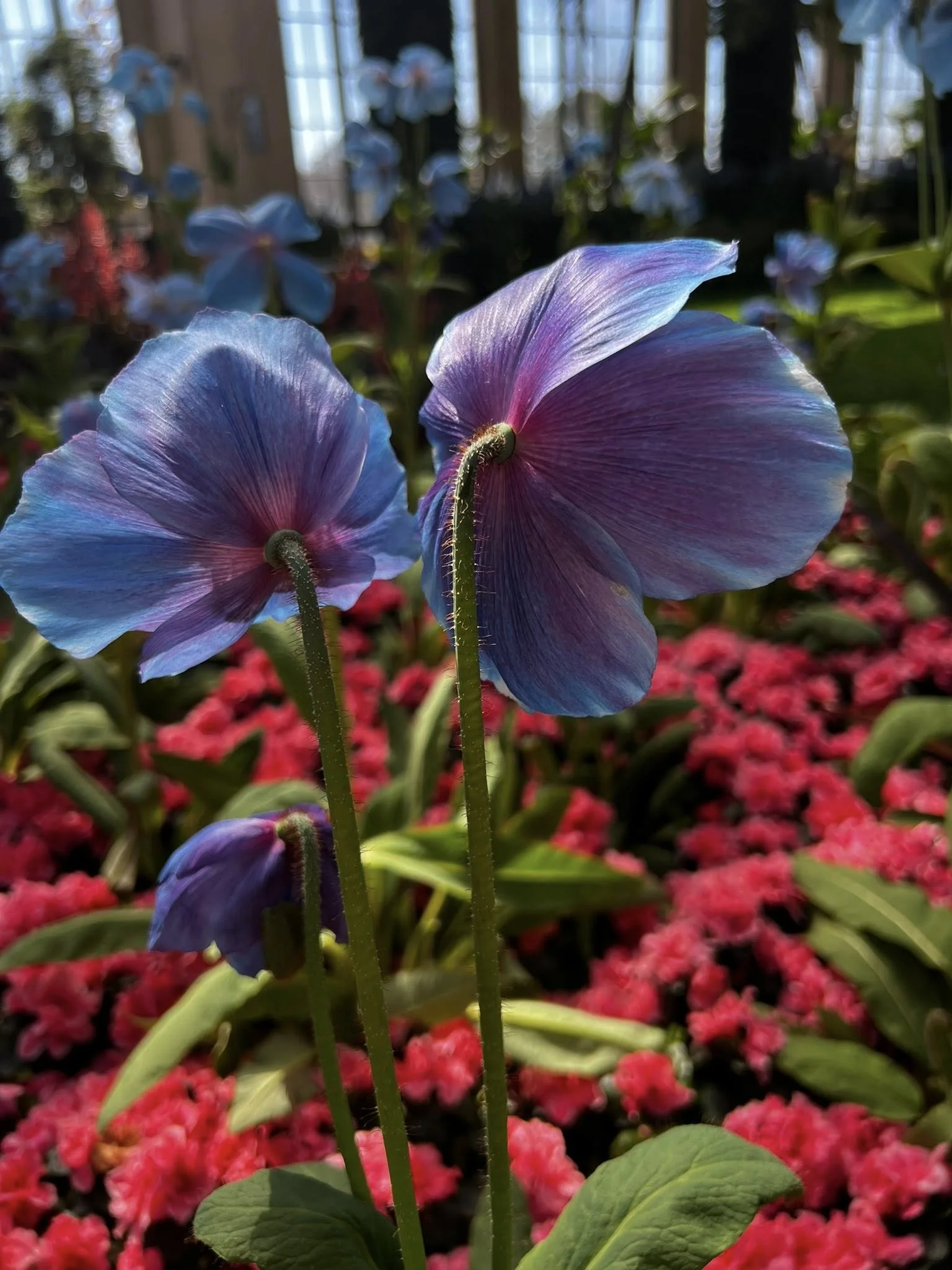
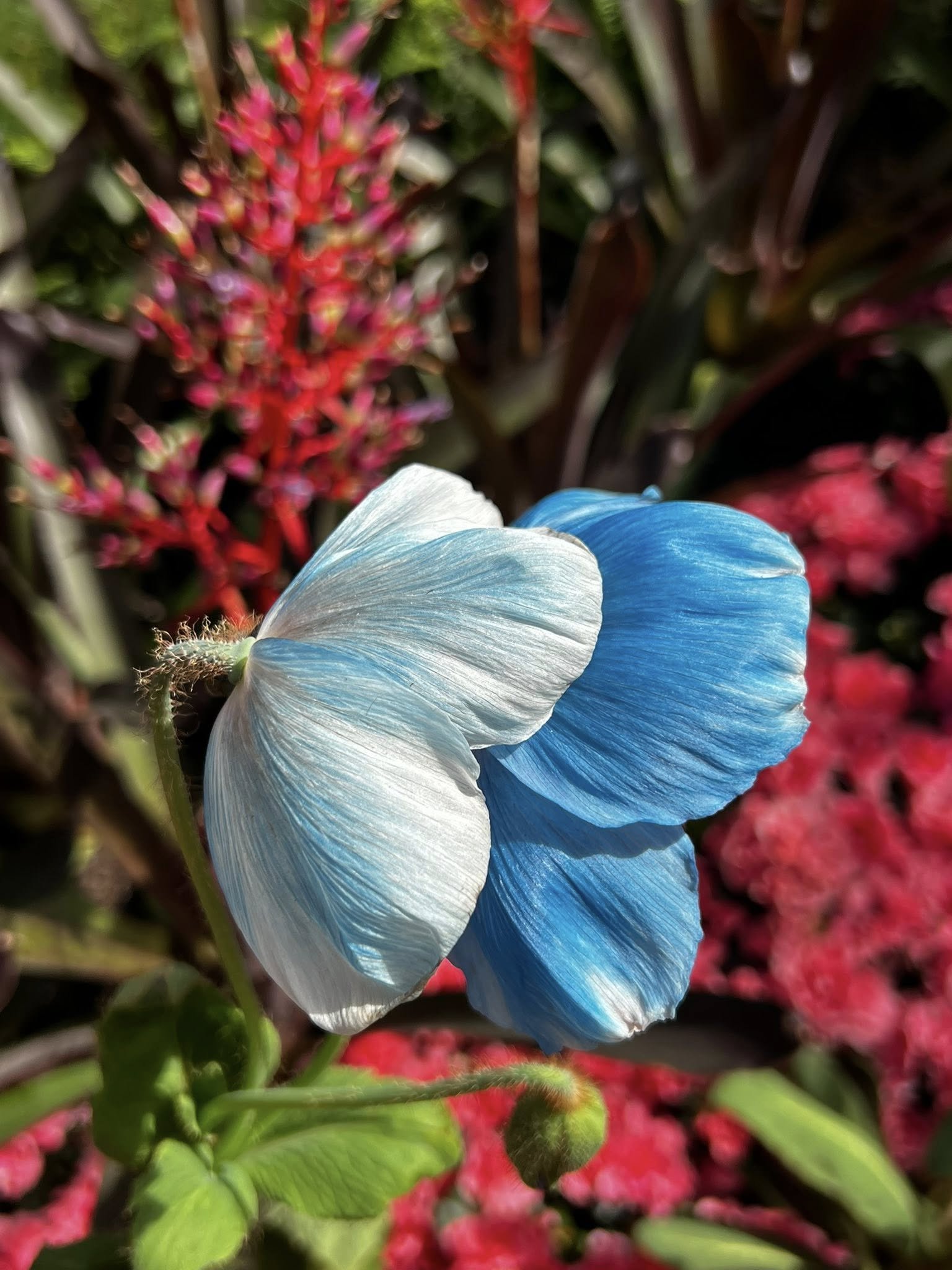
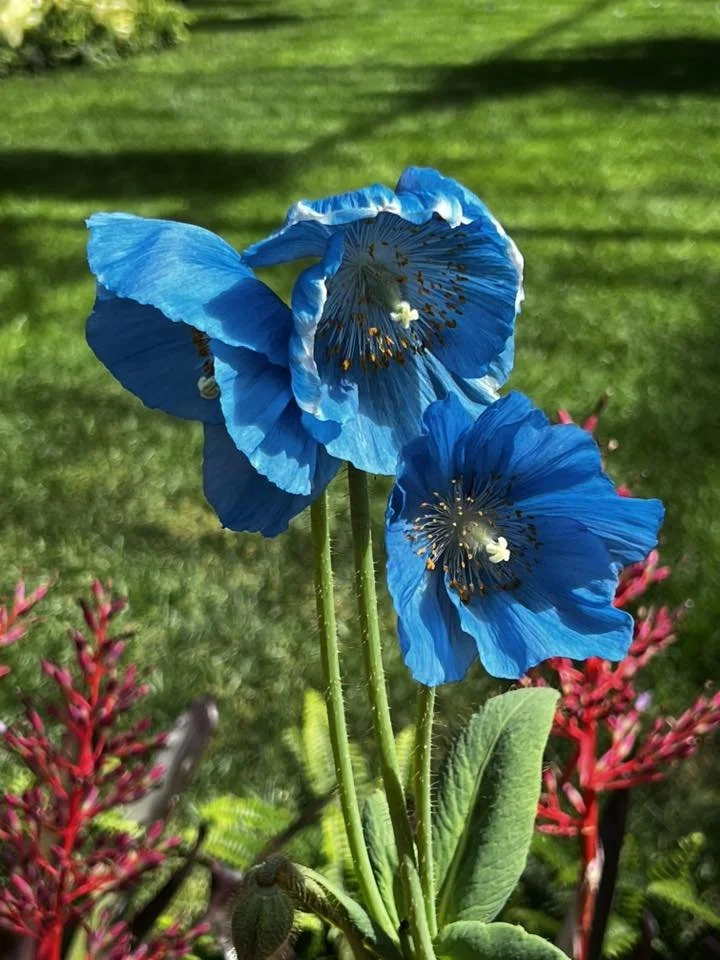
What is interesting from a production standpoint is that many public gardens, including Longwood, rely heavily on strains and selected lines rather than single cultivars, especially for blue forms. This helps ensure uniform bloom timing, consistent color, and better overall performance, something that is critical when you’re creating a display meant to stop people in their tracks. This explains the genetic variability shown in these plants, with a wide range of colors from lavender, purple, pale blue, to dark blue.
Why Are They So Difficult?
The challenge of growing Meconopsis comes down to a few key environmental factors:
1. Temperature Sensitivity
Cool summers are critical. Natively they are summer active and require LONG DAYS AND COOL NIGHTS. Once temperatures consistently rise above about 75–80°F, plants begin to struggle. Warm nights are especially problematic because they increase respiration rates and reduce the plant’s ability to recover from daytime stress.
2. Moisture Balance
These plants require constant moisture, but not saturation. Their roots are adapted to evenly moist, well-aerated soils rich in organic matter. Too dry, and they decline quickly. Too wet, and root rot becomes an issue. They are essentially Goldilocks.
3. Humidity and Air Movement
High humidity is beneficial, but it must be paired with good air circulation. Stagnant, humid air, which describes the south in a nutshell, can lead to disease pressure and rapid decline.
4. Light Exposure
While they need bright conditions to bloom well, direct, intense sunlight, especially in the afternoon, can scorch foliage and stress the plant. Filtered light or morning sun with afternoon shade is ideal.
Where They Thrive
Because of these specific requirements, Meconopsis performs best in regions that naturally mimic its native habitat:
The Pacific Northwest
Coastal Northern California
The British Isles
Parts of New England
High-elevation gardens in mountainous regions
In these areas, gardeners can grow blue poppies with relative success, sometimes even achieving naturalized drifts.
Can You Grow Meconopsis in the Southeast?
Short answer: NO. It is possible, but a serious challenge. I have tried and failed more than once. Success here depends entirely on microclimate. I think people living in the NC mountains have a better chance of succeeding compared to gardeners in the Piedmont region. If you’re determined focus on creating the most favorable conditions possible:
North- or east-facing exposures to avoid intense afternoon sun
Woodland settings with overhead canopy for filtered light
Soils heavily amended with compost to improve moisture retention and structure
Consistent irrigation to prevent drying out, especially during establishment
Mulching to keep root zones cool
Even with all of that in place, summer heat can still be the limiting factor. Longwood purchases seed grown starts as dormant plants from Alaska which are shipped in January. They grow them in their controlled environment production greenhouses forcing them out of dormancy with bottom heat and grow lights. They create a warm (approximately 75F) humid environment, but add fans for airflow, and lower the temperature to 45F each night. As Karl Gercens, Longwood Conservatory Manager explained, “Blue Poppies are like teenage boys. They simply will not bloom in time for the Philadelphia Flower Show. This year they started to flower they day AFTER the show closed. No matter what the growers do, the elusive blue poppies always seem to peak in latter March.” This made me laugh so hard because I had been at longwood two weeks earlier for the Philly Flower Show and there were no Meconopsis to be found at that time!
I hope you will enjoy this short video featuring the 2026 blue poppy display at Longwood Gardens.
A Personal Perspective
As an avid poppy enthusiast, I have tried to get Meconopsis growing here in my hot North Carolina garden and, like many Southern gardeners, I have failed. The combination of heat, humidity, and warm nights has proven difficult to overcome, even with thoughtful siting and soil preparation.
But here’s the thing: some plants aren’t about guaranteed success. Instead, they are about curiosity and about pushing the boundaries of what is possible in your garden. About learning through experimentation. There are also plants that can simply be enjoyed whenever you have the opportunity to encounter them, even if you cannot grow them yourself, and Meconopsis sits firmly in that category for me. Having this once-in-a-lifetime day at Longwood to celebrate the start of my favorite season, during a year that has been fraught with chaos and horrible decisions made by the American government provided me peace for a moment, which is something we all deserve.
The Allure of the Impossible
In a world where so much of gardening is driven by reliability and performance, there is something refreshing about a plant that refuses to be easy.
The Himalayan blue poppy reminds us that gardening isn’t just about results; it is really about the pursuit. The willingness to try something difficult, to learn from failure, and to keep experimenting season after season. Because every now and then, conditions align just enough… and that impossible blue flower opens. And when it does, it’s worth every bit of effort. Hope, after all, springs eternal, especially in the garden.